Kid's desktop companion robot
Zero
- Working prototype · 72-hour sprint
- Co-founder, Fable Engineering · Concept · Industrial design
- Sketch → lovable prototype in one long weekend
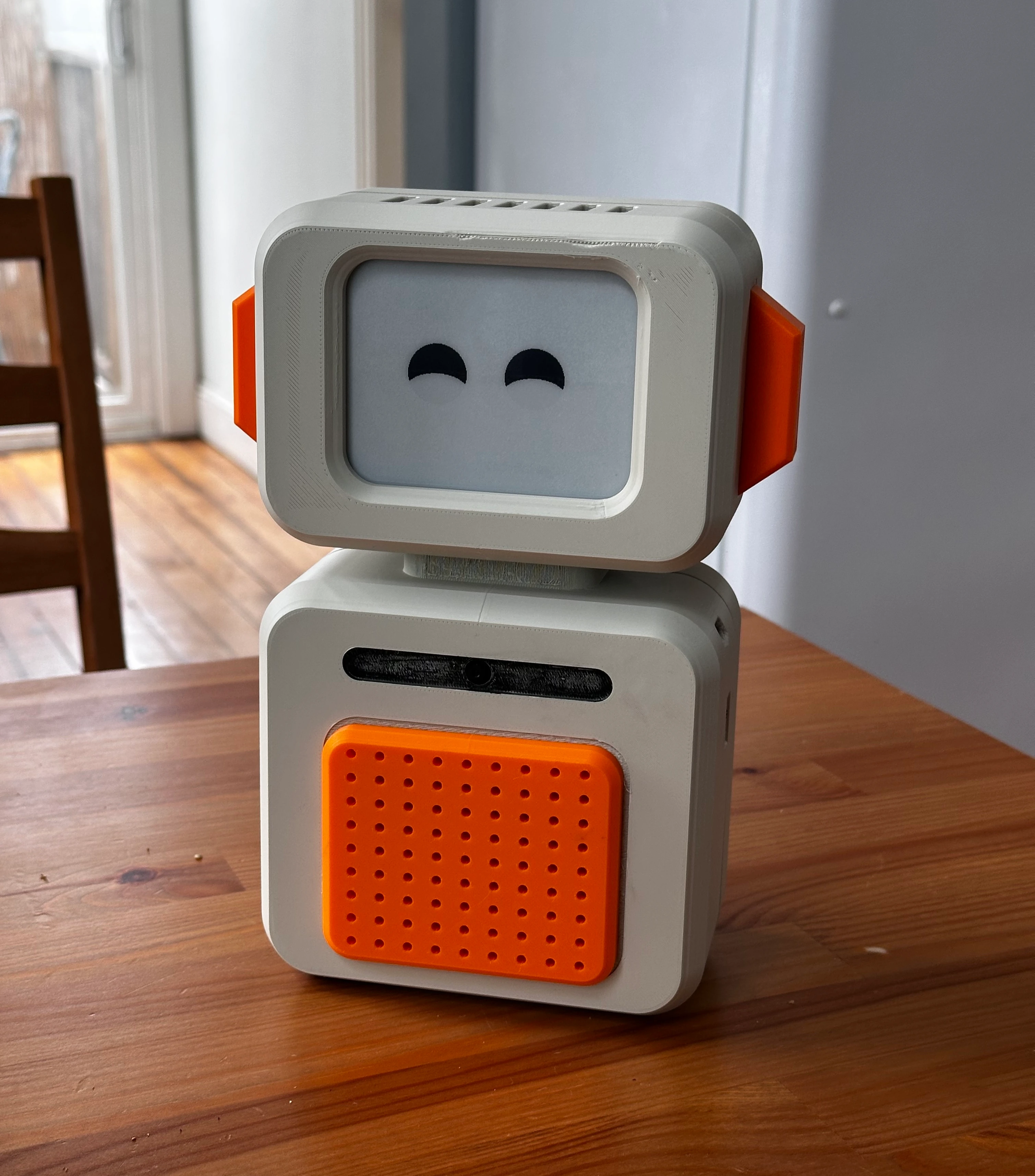
A desktop companion robot for kids, a conversational homework helper with an expressive E-Ink face, voice, and on-device vision. Built end-to-end at Fable Engineering as a 72-hour sprint from sketch to working prototype.
What it does. Converses naturally within parental time and mode controls. Watches via camera and adjusts behavior to proximity, gestures, and what it sees. Expresses emotion through E-Ink sprite animations: idle, happy, focused, thinking, sleepy.
Hardware. Raspberry Pi 5 compute. 4.2” E-Ink display. Dual speakers with amplifier. Digital microphone. Camera. USB-C charging on an internal battery. Wi-Fi and Bluetooth. Two-piece printed shell with an internal rail structure for serviceability.
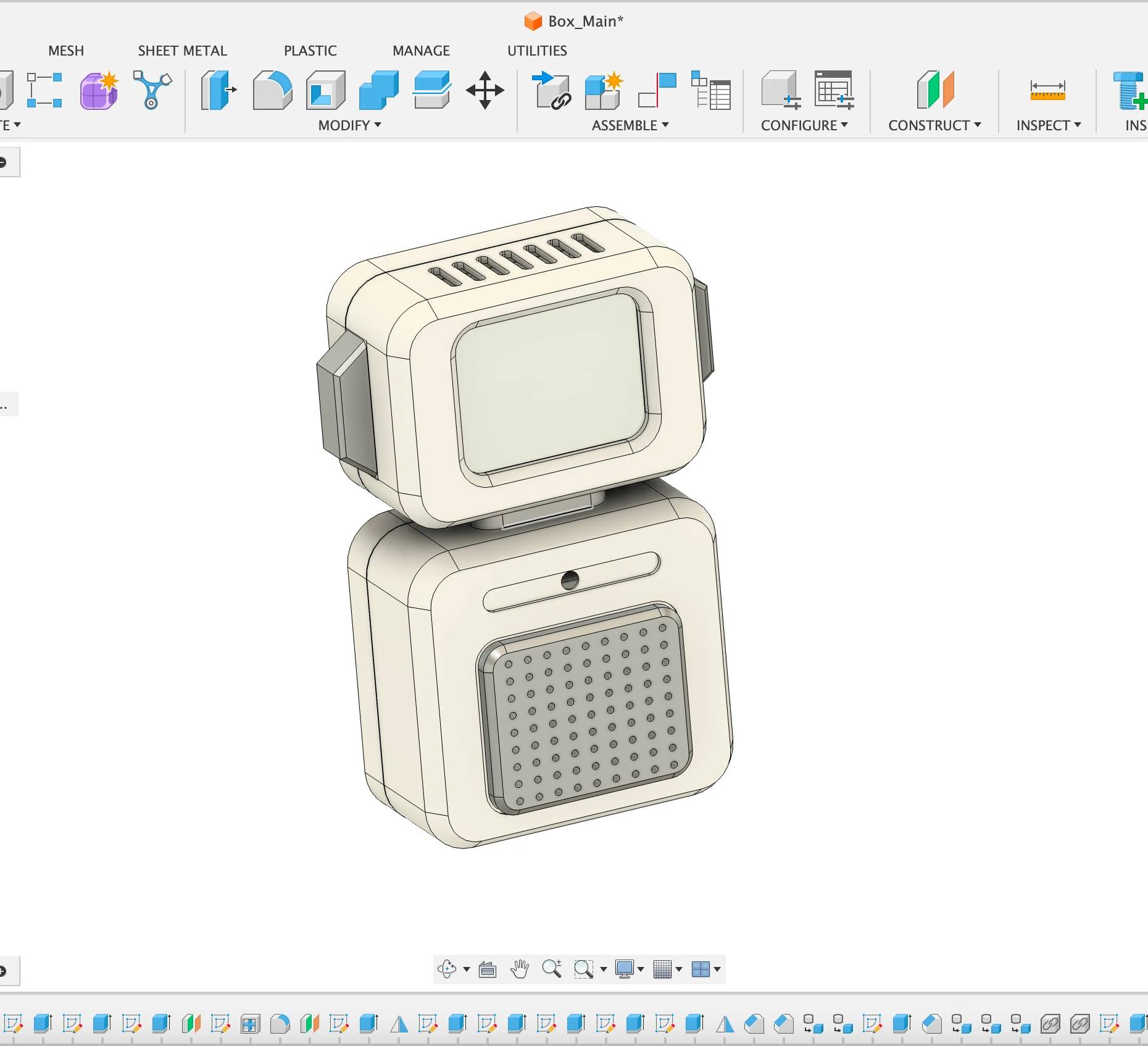
Approach. Compressed the loop from idea to interaction.
- Day 0: mood boards and creative seeding
- Day 1: sketch → AI rendering → Fusion 360 CAD → overnight 3D print on Bambu X1C
- Day 2: electronics assembly, firmware bring-up on Pi 5, first face and voice integration
- Day 3: vision pipeline, conversation integration, shell finishing, expression tuning
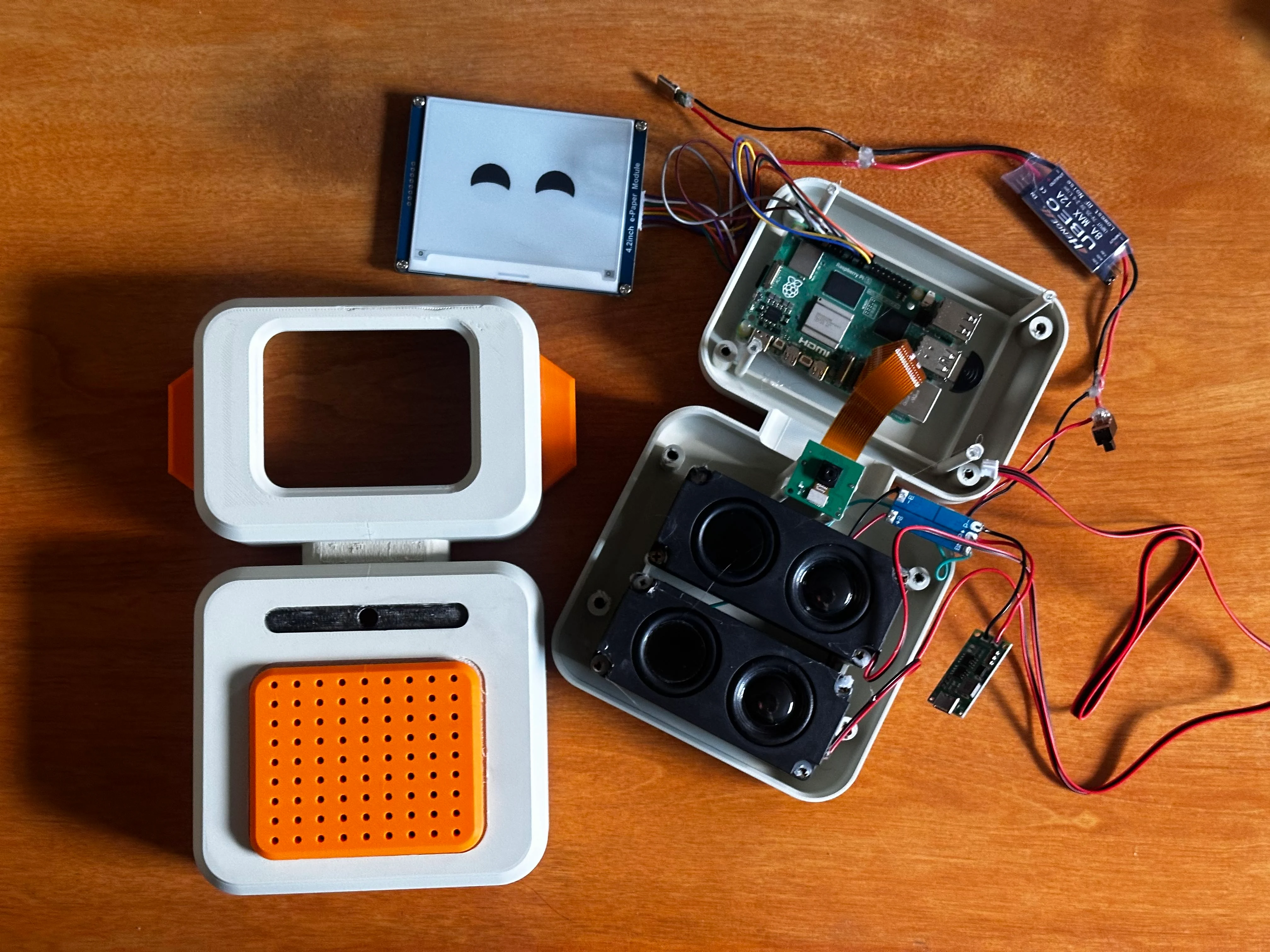
Architecture. Python services on the Pi run an event-driven state machine. Microphone feeds ASR; camera feeds a vision tagger; sensors and buttons publish onto a message bus that drives behaviors and the E-Ink face. Lightweight inference stays on-device; LLM and VLM calls go remote with guardrails.
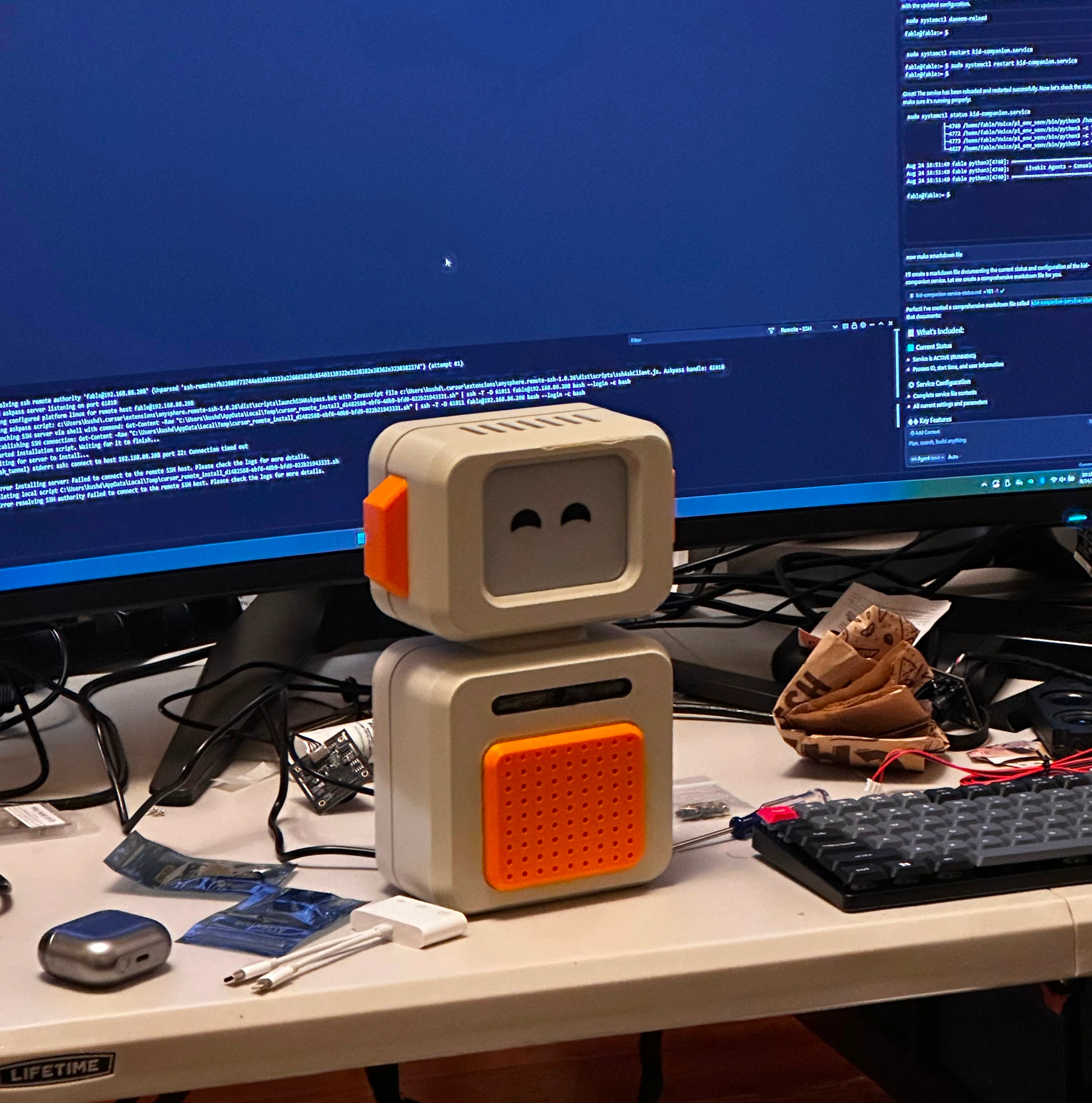
Result. A fast, lovable proof, enough to validate that the core experience is viable and to identify which firmware blocks are worth productizing so future prototypes compress from one weekend to one evening.