Voice-enabled smart ring
Murmur
- Prototype shipped · paused before production
- Co-founder · Hardware · Agent infrastructure · User research
- 1,200+ waitlist · working prototype shipped to soft-launch users
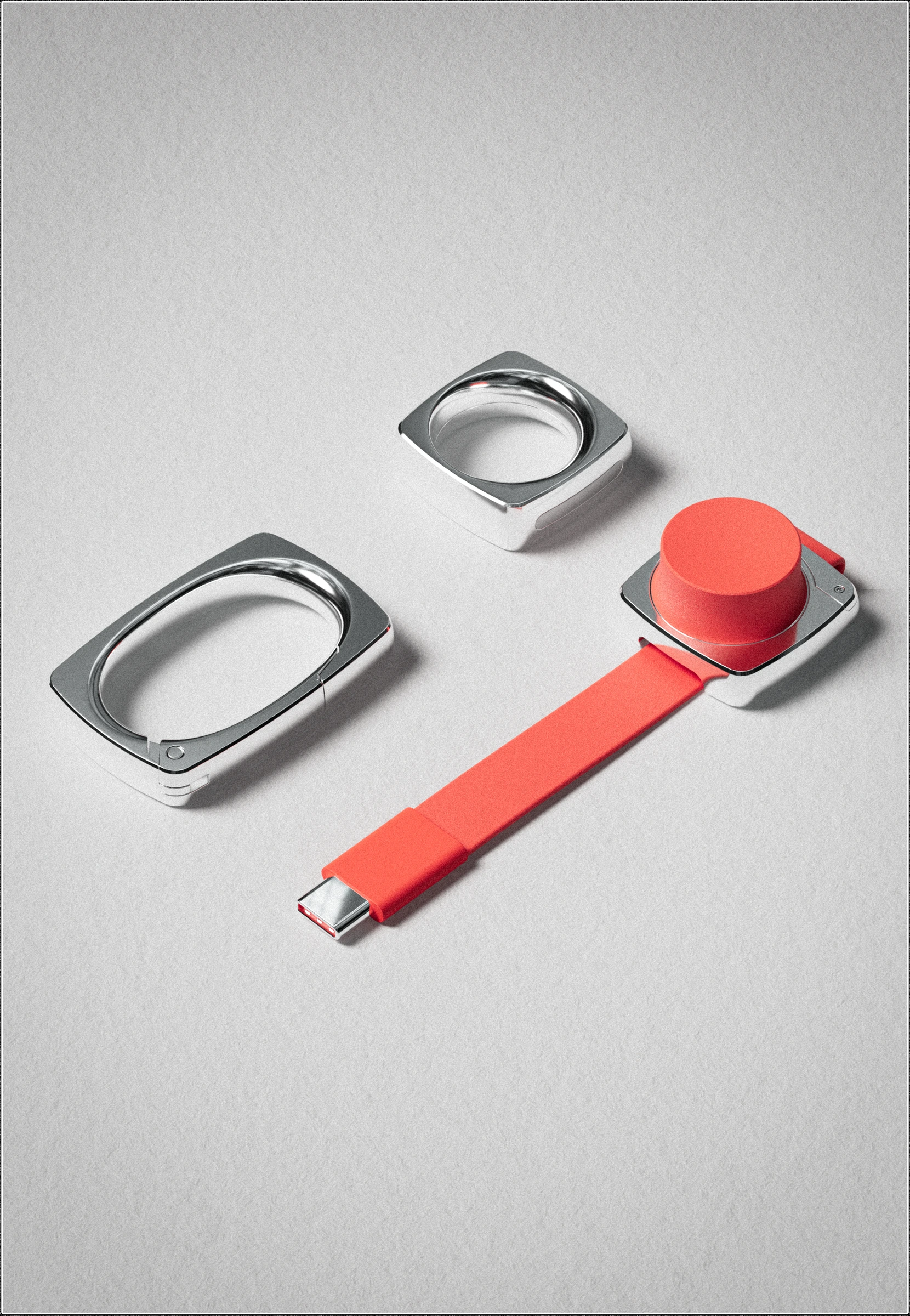
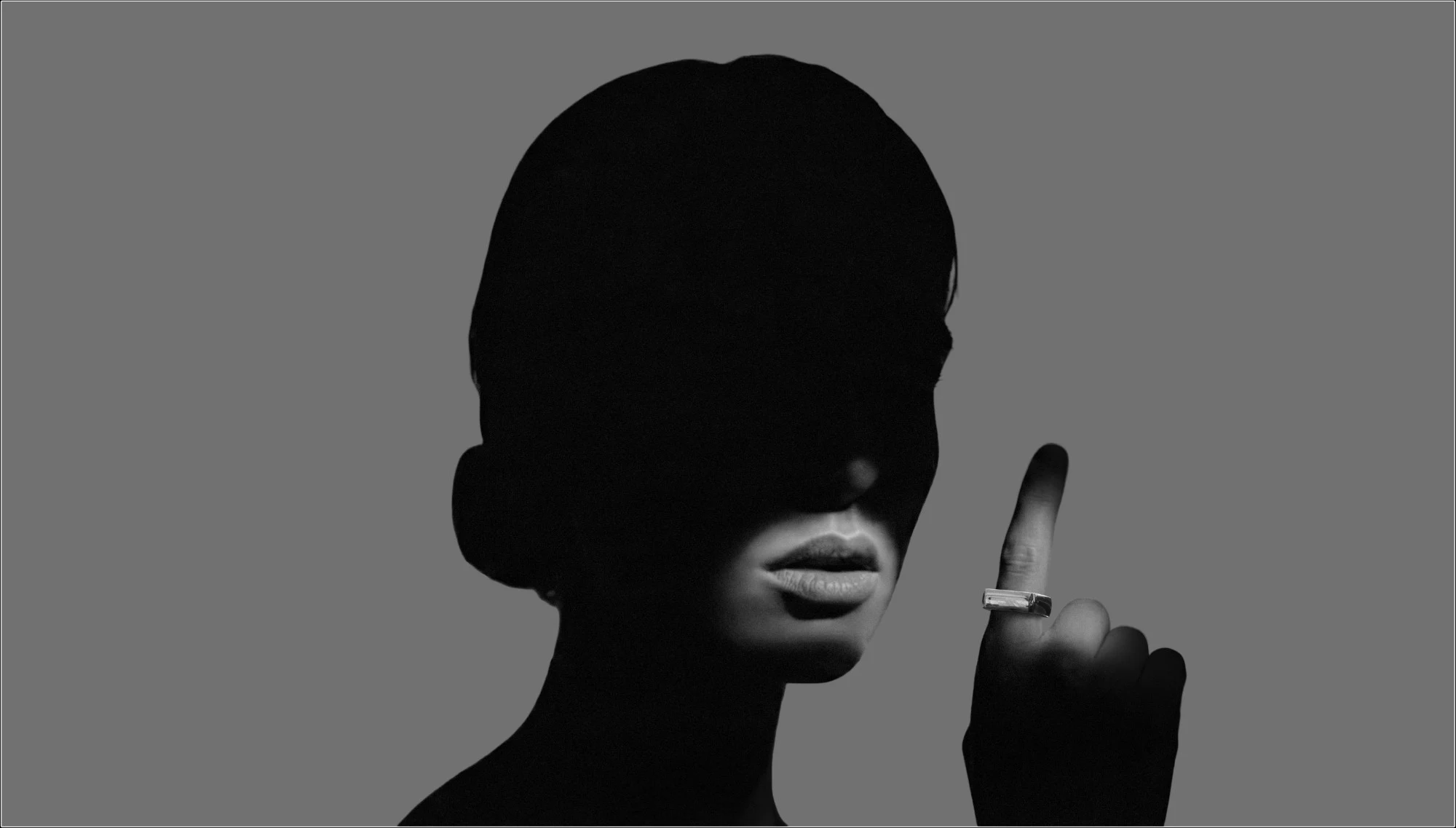
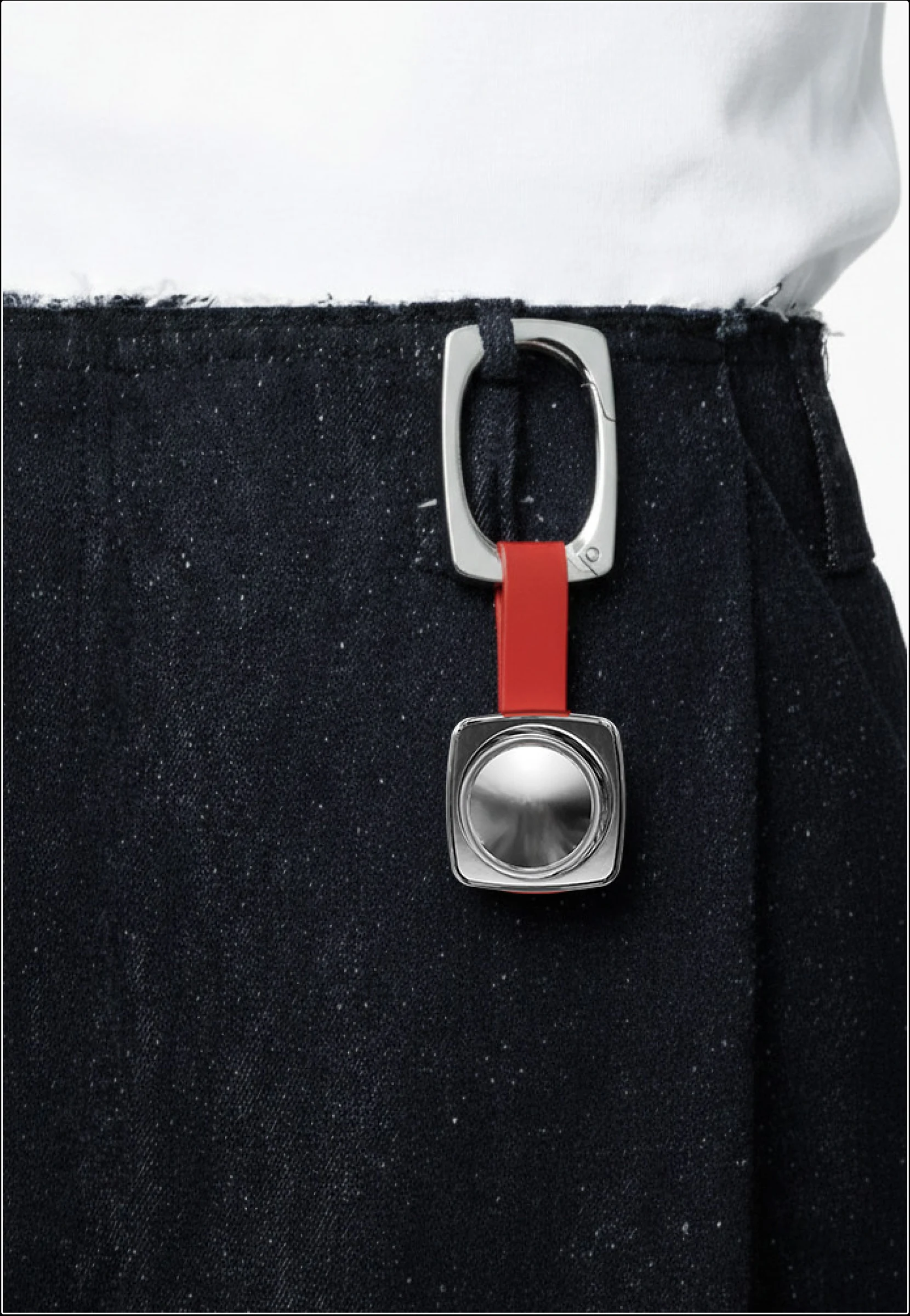
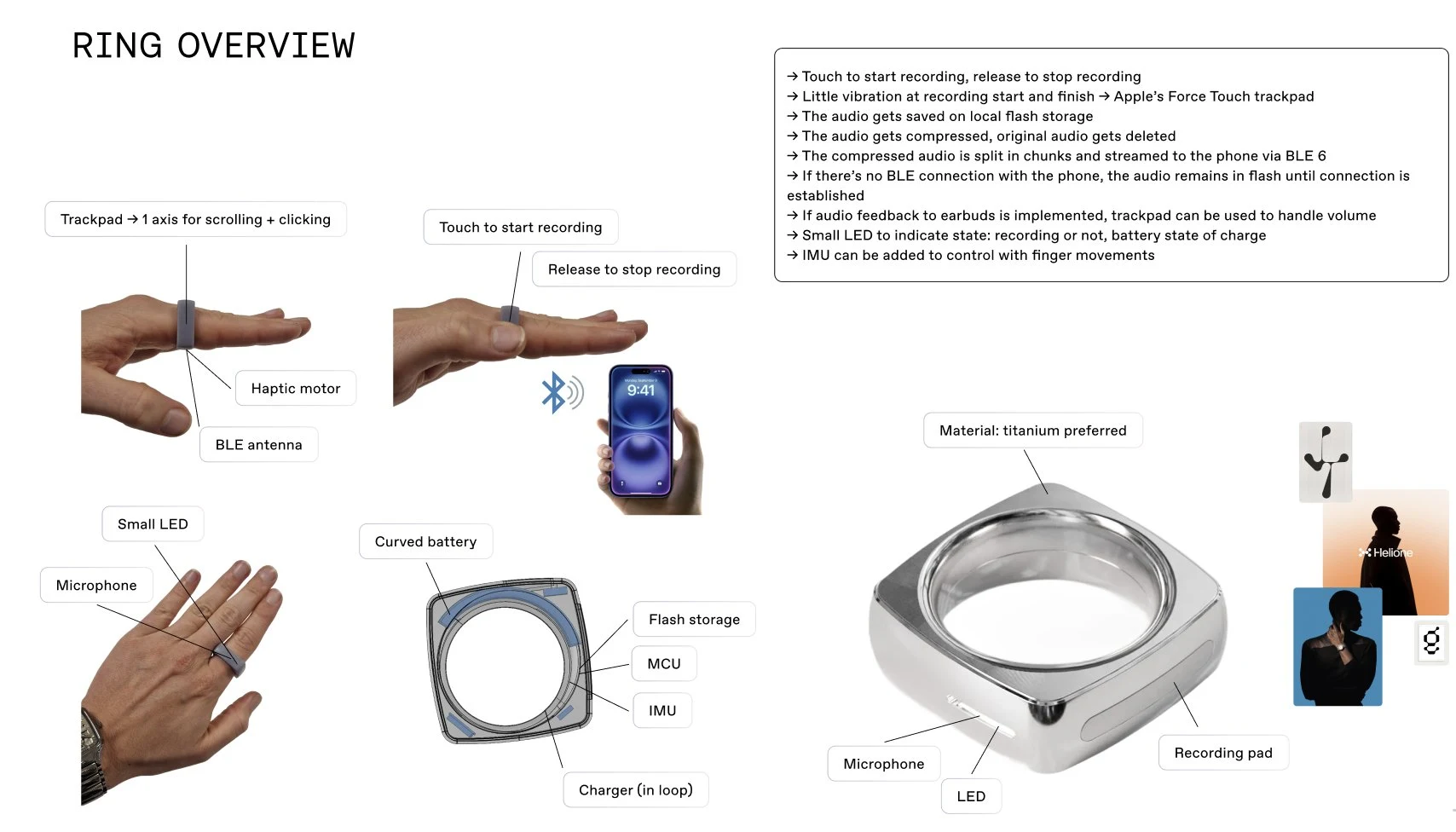
Voice-enabled smart ring for capture and action on the go. Titanium enclosure, squarish form, capacitive touch sensor, microphone. Integrated with Notion, Calendar, and Gmail. Working prototype, soft-launched, paused before production.
The thesis: an extended mind. People lose their best thinking between meetings, in the car, mid-walk, the moments where notes apps and chatbots have too much friction to help. Murmur was designed as ambient infrastructure for that gap. Not a chatbot in a new form factor; a calm cognitive tool that earns its place by helping the wearer see their own thinking from the outside.
Design constraints: no screen, no notifications, no feed. The ring should be invisible until summoned, worn alongside a wedding band, never the center of attention. The interface is gesture-triggered capture; the output is a structured artifact, not another inbox. Hardware as a doorway to intelligence, not the product itself.
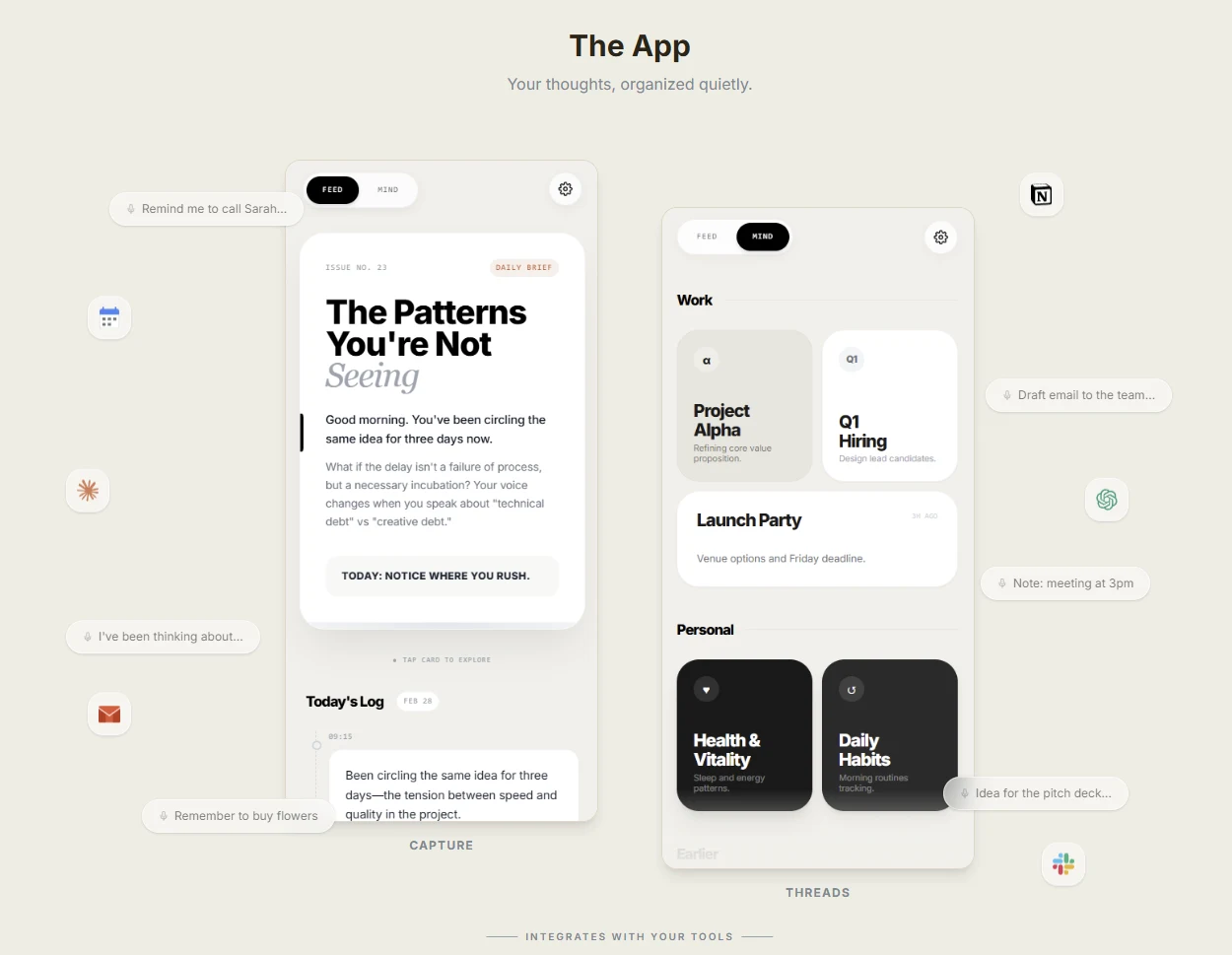
Capture model. Two extremes to avoid: continuous eavesdropping (creepy, drains battery, erodes trust) and the synchronous chatbot (defeats the purpose of having a physical device). Murmur sat between: user-directed, event-based capture, processed asynchronously, surfaced as structured output the wearer could review and route. Privacy-first by default, with as much on-device processing as the hardware allowed.
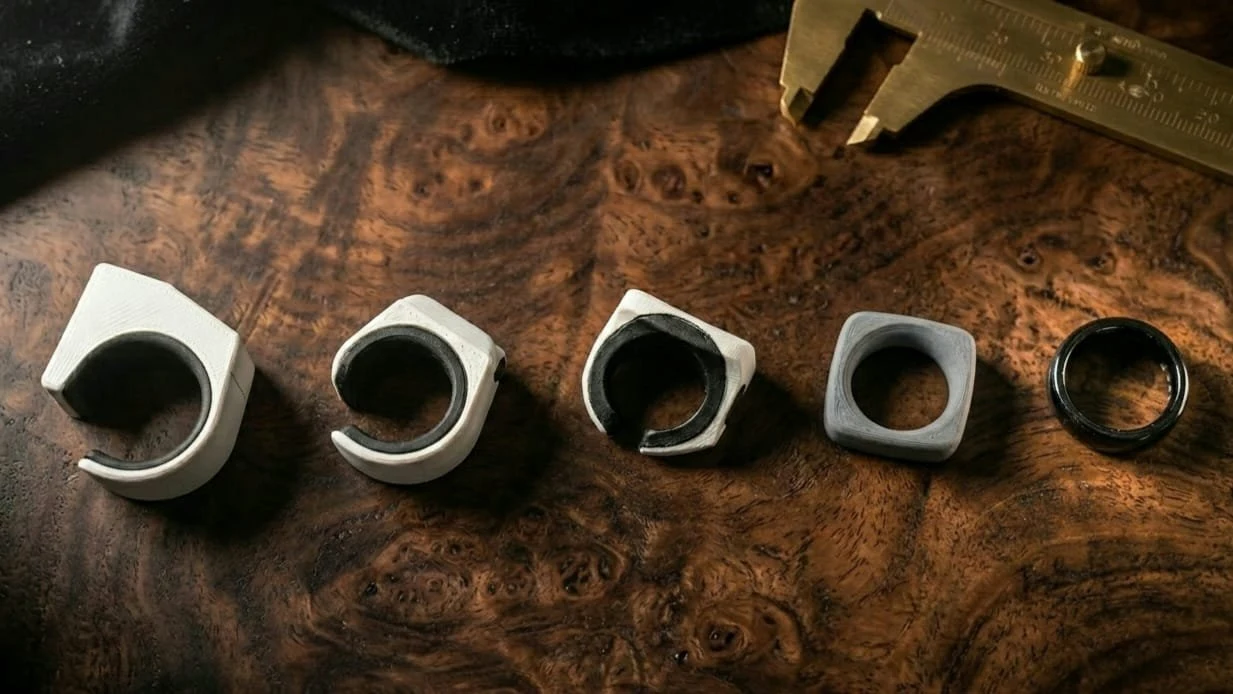
Industrial design. Designed the outer case; ran the prototype iteration loop with 3D-printed builds. Squarish form chosen deliberately, to break out of the “wellness tracker” category and signal a different intent on the hand.
Agent infrastructure. Built the voice AI agent harness from scratch; owned the agentic infrastructure and database. Planner / executor split, retrieval over personal context, structured output back into Notion / Calendar / Gmail without intermediate UI.
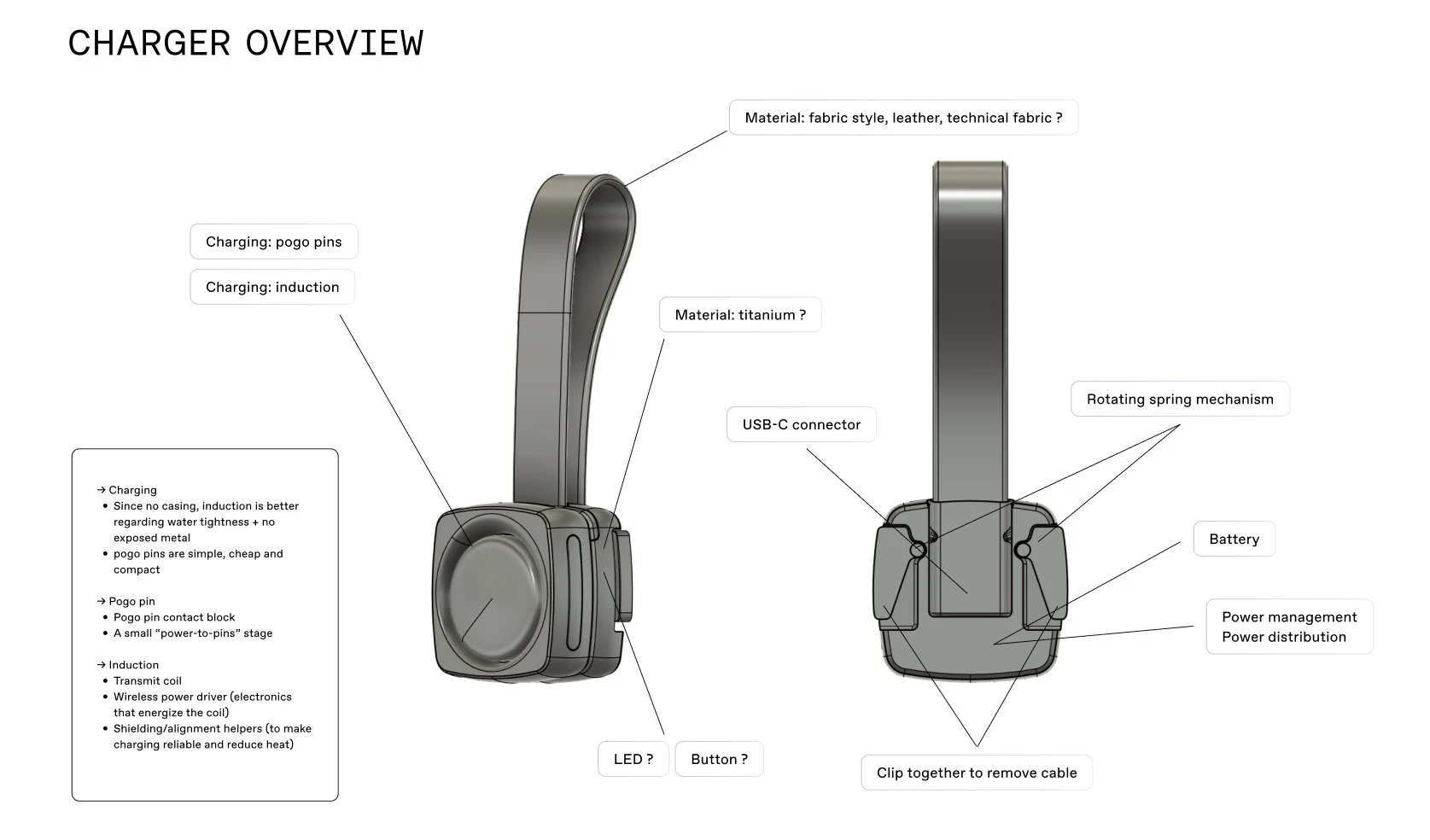
Sourcing. Sourced ODMs at CES and in China; secured production samples. Partnered with a Belgian industrial design studio on the second-iteration enclosure.
User research. Conducted 500+ user interviews with creative professionals, students, and on-the-go workers. The recurring thread: “I know the answer is somewhere in what I already know, but I can’t reach it.” The product was designed around that gap. Not as a memory store, but as a way to see one’s own thinking with more vantage.
Context. Built deliberately against the cycle of failed AI hardware: Humane, Rabbit, and the consumer-robotics graveyard before them (Anki, Jibo, Astro, Vector). The pattern across each failure was treating the device as the product. Murmur treated it as the doorway.
AR glasses + ring: the extension
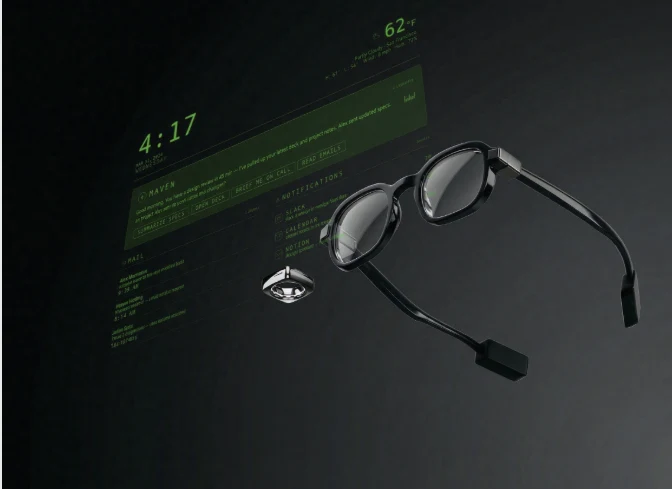
The ring was the input device. The natural next step was a display surface. A way for the structured output to come back without ever pulling out a phone. Same calm-tech constraints: no notifications, no feed, no demand for attention. The ring became the silent controller on the hand; the lens became the contextual surface on the face.
Form. Glasses worn as ordinary frames: bridge, temples, balance close to a normal optical pair. The ring kept its squarish geometry to stay legible as a controller rather than jewelry.
Surface. Ambient HUD that fades in only when there’s something worth surfacing: incoming messages, upcoming calls, calendar context, dictated quick replies. Nothing demanding attention; everything one ring-gesture away from being acknowledged or dismissed.
Reservations. Productized as a Batch 01 reservable bundle: glasses paired with the ring as one purchase, framed as a deliberate alternative to the phone-in-hand default.