Bridging research and industry adoption
DeepTech Commercialization Lab
Year
2024–2025
Institution
UC Berkeley · DeepTech Innovation Lab
Tech & tools
- Technology Assessment
- Market Analysis
- GTM Strategy
- Competitive Landscape
- Industry Interviews
At the DeepTech Innovation Lab at UC Berkeley, the work bridged cutting-edge technology with viable market strategy — assessing commercialization potential, developing roadmaps, and structuring industry-adoption pathways. The work required a blend of technical understanding and business framing to turn breakthrough research into scalable industry solutions. The portfolio covered two distinct technology areas: Quantum Circuits for Superconducting Digital Computing, and MVMNT-X’s Carbon Capture & Sustainable Agriculture systems.
Quantum Circuits for Superconducting Digital Computing
Superconducting digital computing — based on Rapid Single-Flux Quantum (RSFQ) logic — is positioned to reshape high-performance computing, AI accelerators, and quantum control by overcoming fundamental limits of CMOS-based systems. The work assessed commercialization potential, developed an adoption roadmap, and created strategies for industry uptake.
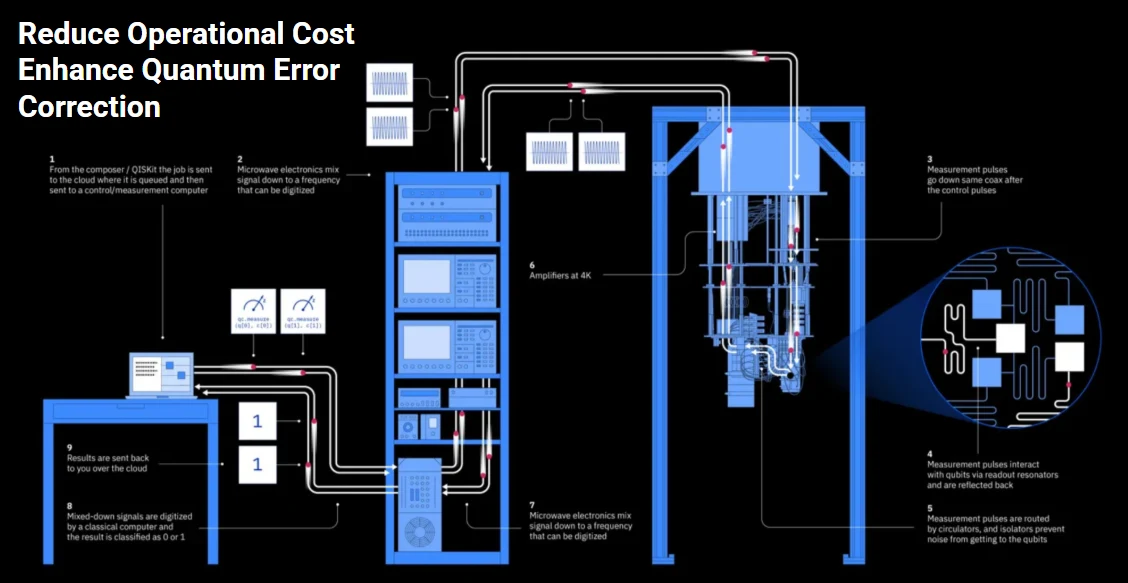
Technology assessment. Conducted market analysis for superconducting circuits, mapping impact on energy efficiency, scalability, and speed versus traditional semiconductors. Evaluated technical readiness against industrial-application thresholds.
Business case. Worked alongside Berkeley researchers to articulate unique selling points (USPs). Built a cost–benefit analysis of RSFQ logic — capital cost, cooling infrastructure, throughput, and total cost of ownership — and identified the value propositions most salient to each industry partner profile.
Market strategy and industry interviews. Conducted 20+ interviews with experts across HPC, AI accelerators, and the quantum-computing sector. Synthesized adoption barriers, validated market readiness, and identified the early-adopter cohort most likely to license or co-develop the technology.
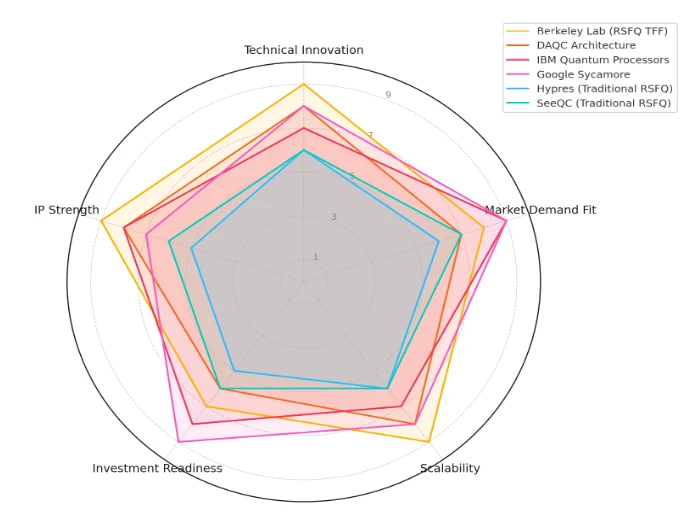
Competitive analysis. Mapped competitors in the superconducting-computing space, identified Berkeley Lab’s early-mover advantage in RSFQ circuit design, and structured differentiation along performance and IP axes.
Go-to-market strategy. Proposed technology-licensing opportunities for semiconductor and quantum-computing firms, positioned superconducting circuits for long-term scalability, and developed a phased commercialization roadmap with technology-transfer milestones.
Impact. Validated the market potential of quantum superconducting circuits — sized at a projected 32.7% CAGR — and produced a clear technology-transfer pathway from research lab to industry. The output positioned superconducting digital computing as a credible next-generation computing player.
MVMNT-X — Carbon Capture & Sustainable Agriculture
Applied the same lifecycle to MVMNT-X’s portfolio of carbon-capture and sustainable-agriculture systems: technology assessment, market positioning, competitive landscape, and a phased commercialization roadmap. Translated the underlying science — adsorption mechanisms, regeneration thermodynamics, agronomic outcomes — into a commercial narrative aligned with industrial sustainability targets and emerging carbon-removal markets.
Outcome
Across both technologies, the deliverable was a research-to-industry commercialization playbook — technology readiness, market sizing, competitive positioning, industry validation, and phased licensing pathways. The work surfaced not just market potential but the specific structure under which a research breakthrough can become a licensable product, and the partner profiles most likely to absorb it. The methodology is reusable for future Berkeley deep-tech licensing efforts.